

Symphonie de dômes
Symphonie des dômes is a staged musical concert inspired by the dome as both a real and symbolic space, and as a place of connection between humanity, nature, and the universe. Built long before the invention of microphones and amplification systems, the domes of ancient Persia were designed to naturally carry the voice and sound. Speech unfolds, reflects, and resonates in a unique way, creating an intimate relationship between space and the listeners.
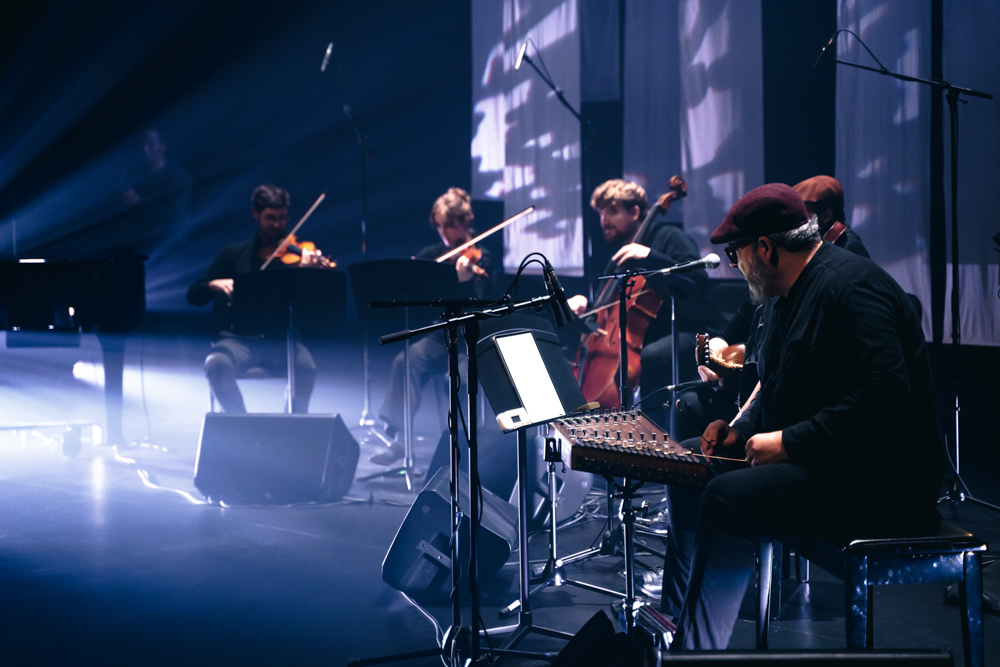
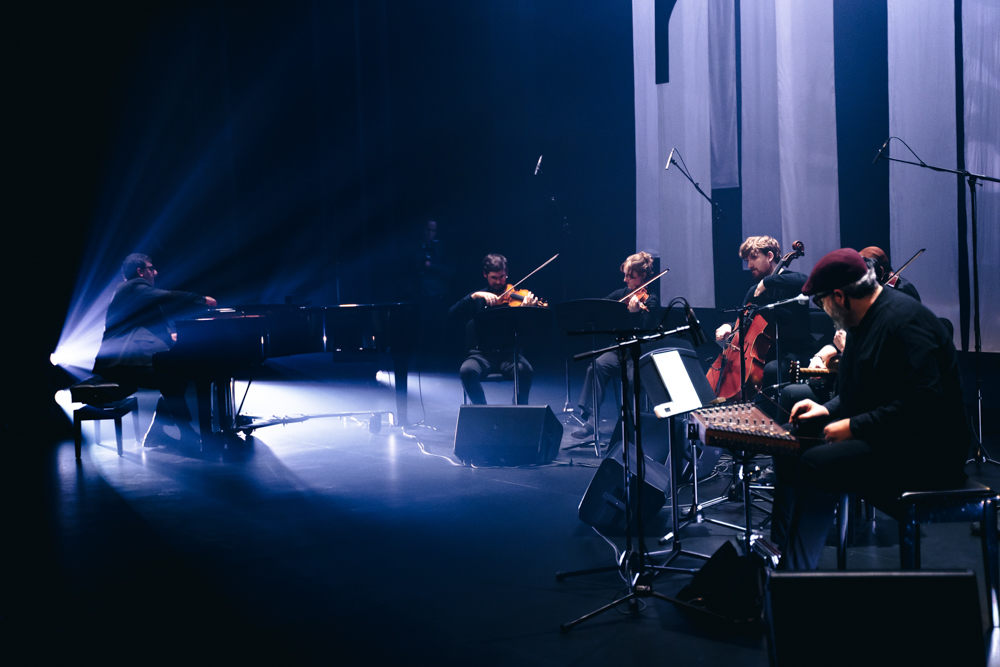
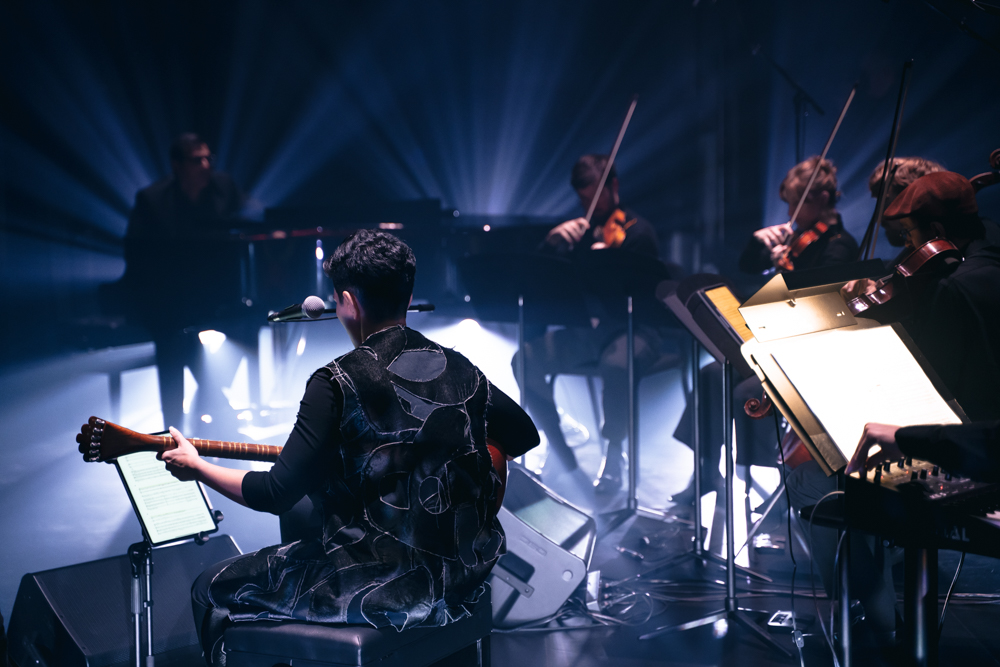
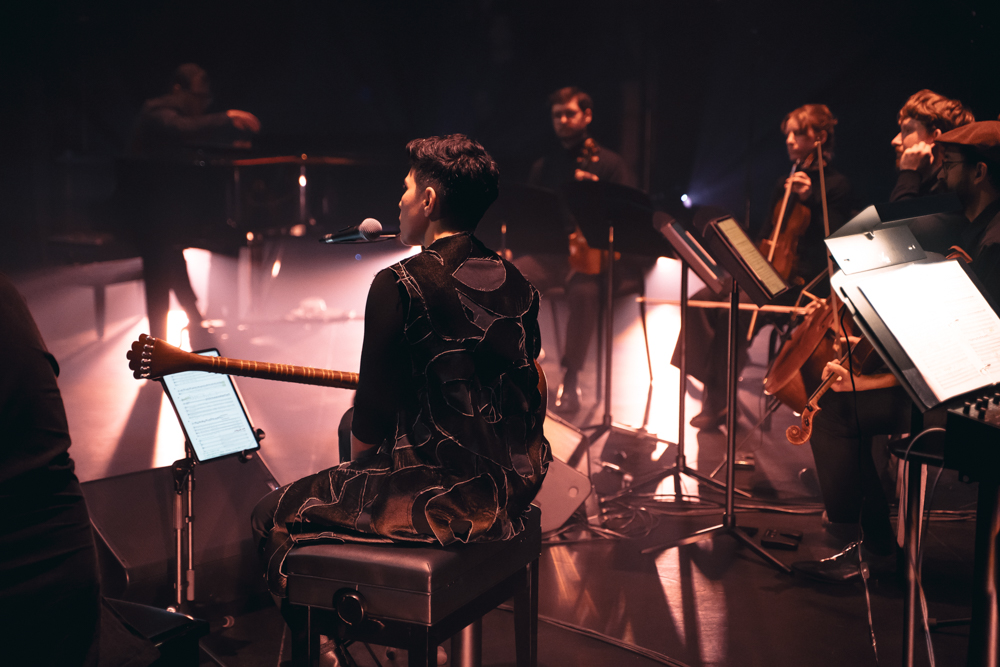
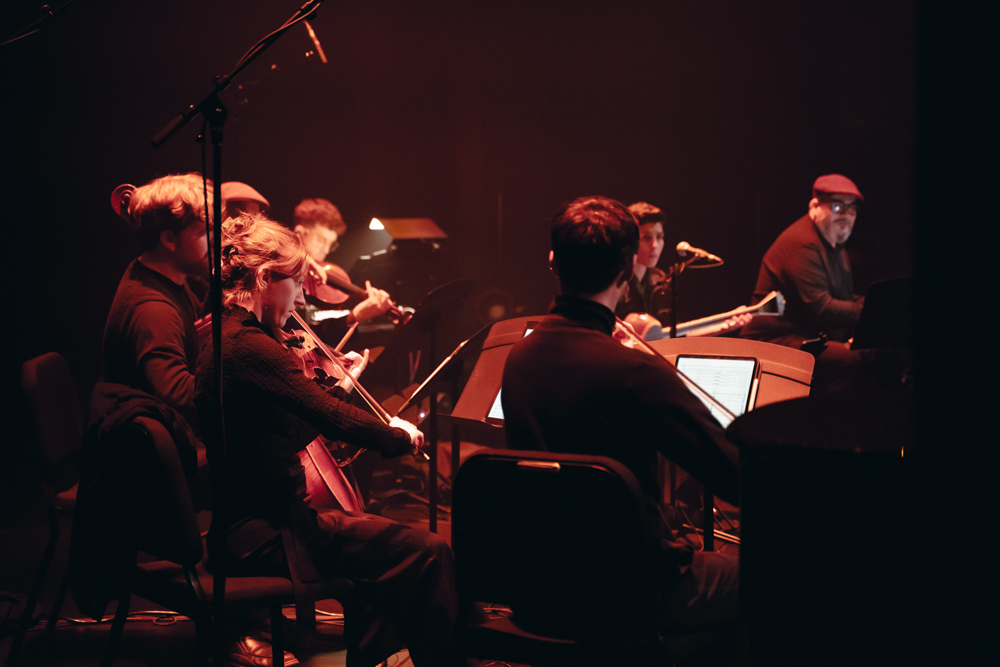
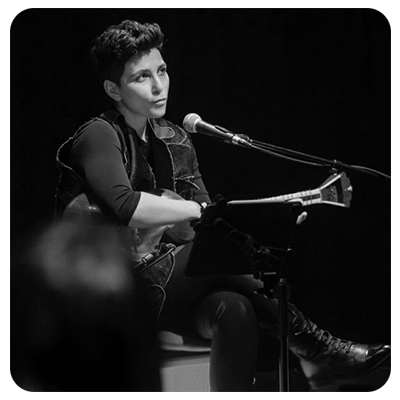
Conceived by artistic director Elham Manouchehri and composer Hooshyar Khayam, the work is scored for string quartet, piano, târ, santur, and synthesizer. The voice occupies a central place in the work, bringing to life poems from the great Persian literary tradition, notably those of Rumi, Attar, Saadi, and Khayyām. These timeless texts unfold through space as echoes connecting Persian cultural memory to a deeply contemporary artistic experience.
—
Symphonie des dômes is a staged musical concert born at the intersection of memory, architecture, poetry, and sound. It draws inspiration from the dome as both a real and symbolic space, and as a place of connection between humanity, nature, and the universe.
Conceived by artistic director Elham Manouchehri and composer Hooshyar Khayam, the work draws inspiration from the domes of ancient Persia, these monumental structures that have shaped Iran’s spiritual and artistic imagination for centuries.
The domes have long held a particular fascination for both artists. Their architectural beauty, symbolic significance, and extraordinary acoustics nourish a shared imagination. Built long before the invention of microphones and amplification systems, these spaces were designed to naturally carry the voice and sound. Beneath a dome, speech unfolds, reflects, and resonates in a unique way, creating an intimate relationship between space and the listeners.
History and Inspiration
By sharing memories of their childhoods, Elham Manouchehri and Hooshyar Khayam discovered a shared passion for the domes of Persian architecture, a fascination with the resonance, light, and spiritual dimension of these spaces. Elham was profoundly influenced by the domes of Isfahan, where she was born, while Hooshyar was deeply marked by a visit to the Shah Abbas Mosque. Both were profoundly moved by the emotional power of these places and by the way the space itself seemed to breathe with the sounds. These precious moments contributed to the awakening of their respective artistic vocations.
How can the experience of a dome be translated into music and performance? How can audiences be invited to feel this space of resonance, contemplation, and connection that extends beyond architecture itself? It was in seeking to answer these questions that Symphonie des dômes was born.
Nearly two years of research, creation, and collaboration with artists from different disciplines were required to bring this work into being. A symbolic dome, built from sound, light, movement, and memory. A space where history, architecture, and contemporary creation coexist.
Symphonie des dômes draws upon the memory of an ancient civilization while fully embracing a contemporary artistic approach. It is neither the reconstruction of a historical site nor the illustration of a tradition, but rather an invitation to listen to the space, to feel the resonance of time, and to step, even for a brief moment, beneath an invisible dome where memory, poetry, creation, East and West, meet.
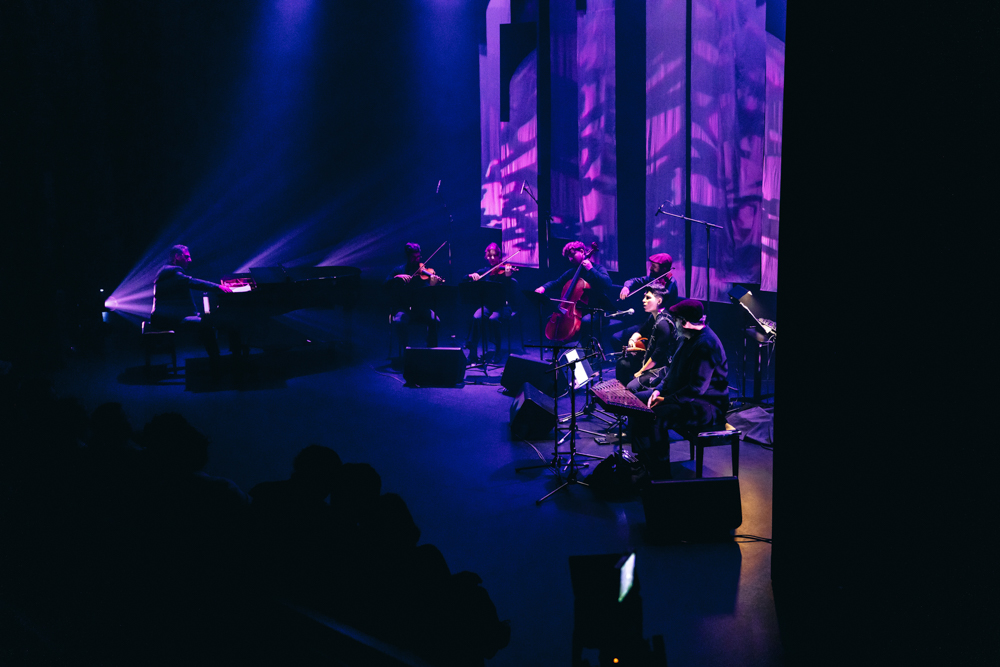
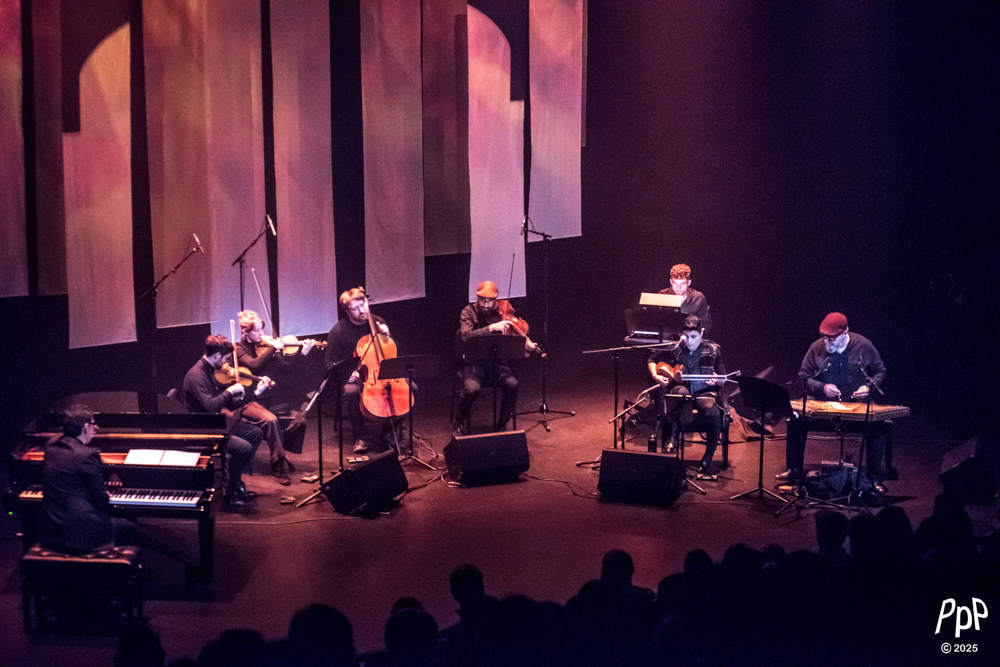
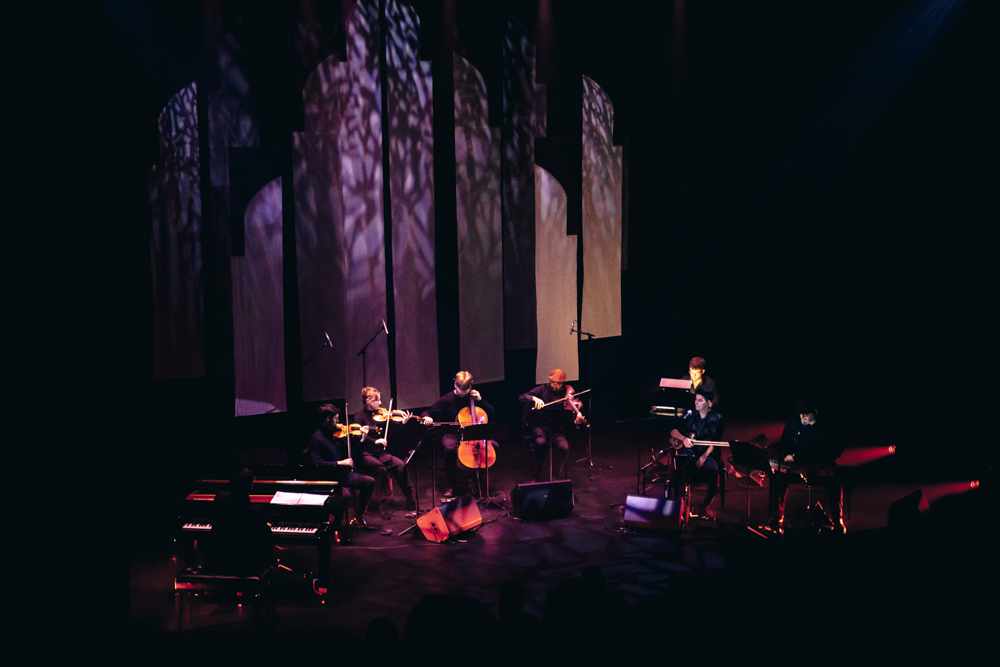
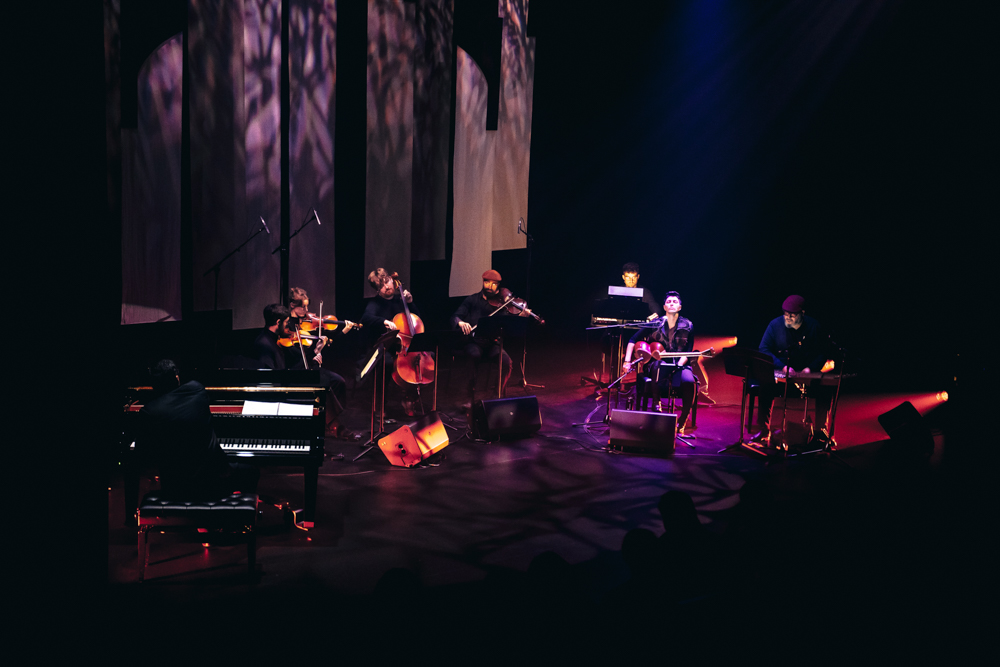
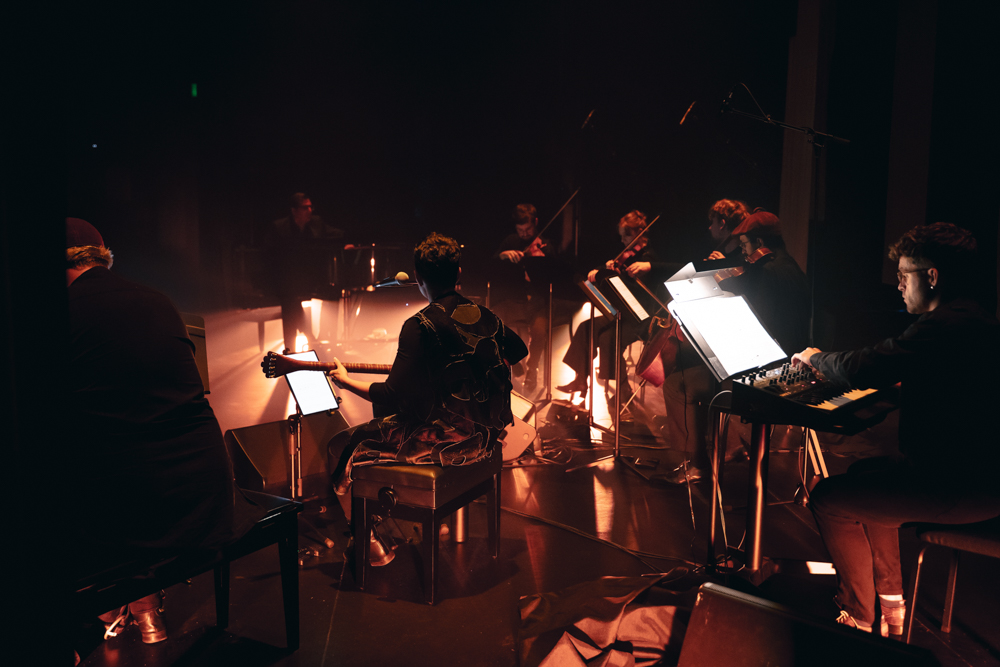
Extensive scenographic work was undertaken. Dynamic lighting reflecting the emotional essence of the music is projected onto structures whose forms evoke domes, creating a space for contemplation. Light and spatialized sound transform the stage into a living architecture where the audience is invited to inhabit the work rather than simply observe it.
Structure and Instrumentation
The work is structured in four movements, each associated with one of the four fundamental elements: earth, water, wind, and fire. Through these four tableaux, the music explores different forms of energy, movement, and transformation while maintaining circularity as the central principle of its development.
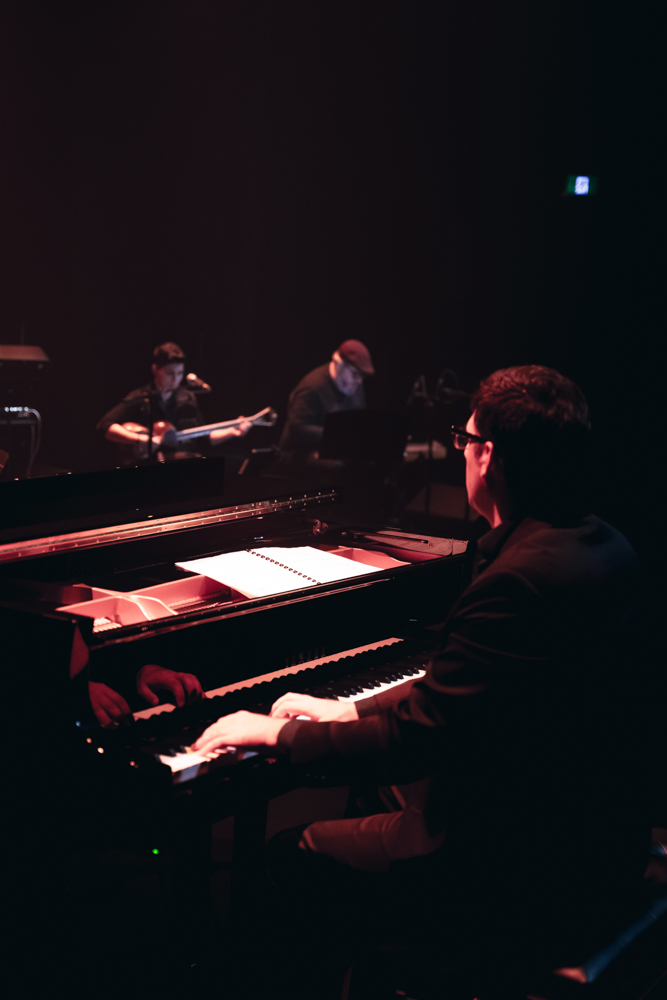
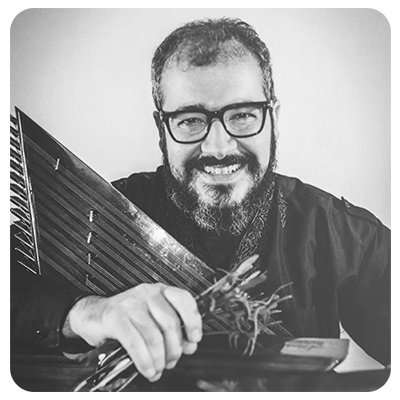
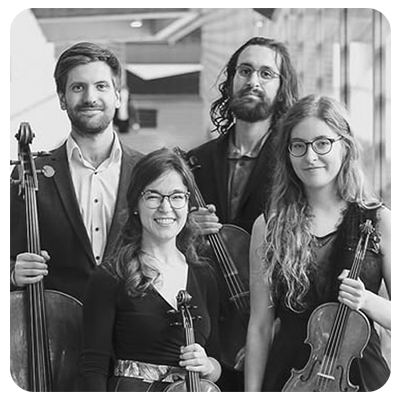
The Quatuor Andara serves as the architectural structure of the work, like four pillars supporting a temple. The piano, performed by the composer himself, acts as the driving force propelling the music forward. Joining this foundation rooted in the Western classical tradition are the târ and the santur, emblematic instruments of Persian music. The synthesizer, functioning as a kind of composed reverberation, opens the sonic space where Eastern and Western musical traditions can engage in a dialogue.
The voice occupies a central place in the work. Performed by Elham Manouchehri, it gives voice to poems from the great Persian literary tradition, notably those of Rumi, Attar, Saadi, and Khayyām. These timeless texts unfold through space as echoes connecting Persian cultural memory to a deeply contemporary artistic experience.
History of the Domes
For the peoples who lived under their shadows, domes have never been merely architectural elements. They represent a connection between earth and sky, between the visible and the invisible. Their circular form evokes unity, perpetual movement, and the search for meaning. In Persian culture, they are often perceived as gateways to the cosmos, spaces where matter, light, sound, and spirituality converge.
The history of domes in Iran dates back to the Sasanian period, between the third and seventh centuries. The Sasanians notably developed their use in fire temples (Atashkadeh), gathering places where the sacred fire of Zoroastrianism burned. A symbol of purity and divine presence, this fire occupied the center of both the architectural and spiritual space.
With the arrival of Islam, the art of the dome continued to evolve, giving rise to some of the world’s most remarkable architectural achievements. In Isfahan, the former imperial capital of Persia, mosques, palaces, and religious buildings elevated this heritage to an exceptional level. Their mosaic-covered domes, harmonious proportions, and unique acoustics remain among the greatest accomplishments of Persian architecture.
The domes of Isfahan formed part of Elham Manouchehri’s childhood landscape, their majestic presence and silent beauty profoundly nourishing her imagination. This fascination extends beyond mosques, as the city’s Armenian churches are also crowned with domes and adorned with frescoes of extraordinary artistic richness.
Inspired by the domes of Persian architecture, Symphony of Domes is an immersive creation where music, poetry, light, and space converge. A journey through resonance, memory, and our relationship with the visible and the invisible.
Creative Team
On Stage

Gallery